Baby Food
Baby Food Guide: Introducing Nutritious First Foods and Building Healthy Eating Habits
Introducing solid foods is an exciting milestone for both babies and parents. During the first year of life, babies grow rapidly and require a variety of nutrients to support brain development, healthy bones, strong muscles, and an active immune system. Offering age-appropriate, nutritious foods alongside breast milk or infant formula can help establish healthy eating habits that last a lifetime.
For families in New Jersey and Staten Island, understanding when and how to introduce baby foods can make mealtimes enjoyable, safe, and developmentally appropriate. Every child develops at their own pace, so parents should work with their pediatric healthcare provider if they have questions about feeding milestones or special dietary needs.
When Is a Baby Ready for Solid Foods?
Many babies show signs of readiness for complementary foods around 6 months of age, while continuing to receive breast milk or iron-fortified infant formula. Signs that a baby may be ready include:
- Good head and neck control.
- Ability to sit with minimal support.
- Interest in watching others eat.
- Opening their mouth when food is offered.
- Ability to move food from a spoon into the throat rather than pushing it out with the tongue.
Solid foods should complement—not replace—breast milk or formula during the first year.
Why Baby Nutrition Matters
The first years of life are a critical period for growth and development. Nutritious foods help provide:
- Iron for brain development.
- Protein for growth and tissue repair.
- Healthy fats for the developing nervous system.
- Calcium and vitamin D for bones and teeth.
- Vitamins and minerals that support immunity.
- Fiber from fruits and vegetables as the diet expands.
Introducing a variety of flavors and textures early may also encourage more adventurous eating later in childhood.
First Foods to Consider
There is no single “perfect” first food. Parents can choose nutrient-rich options based on their baby’s developmental readiness.
Iron-Rich Foods
Iron is especially important after about 6 months of age because babies’ natural iron stores begin to decline.
Good choices include:
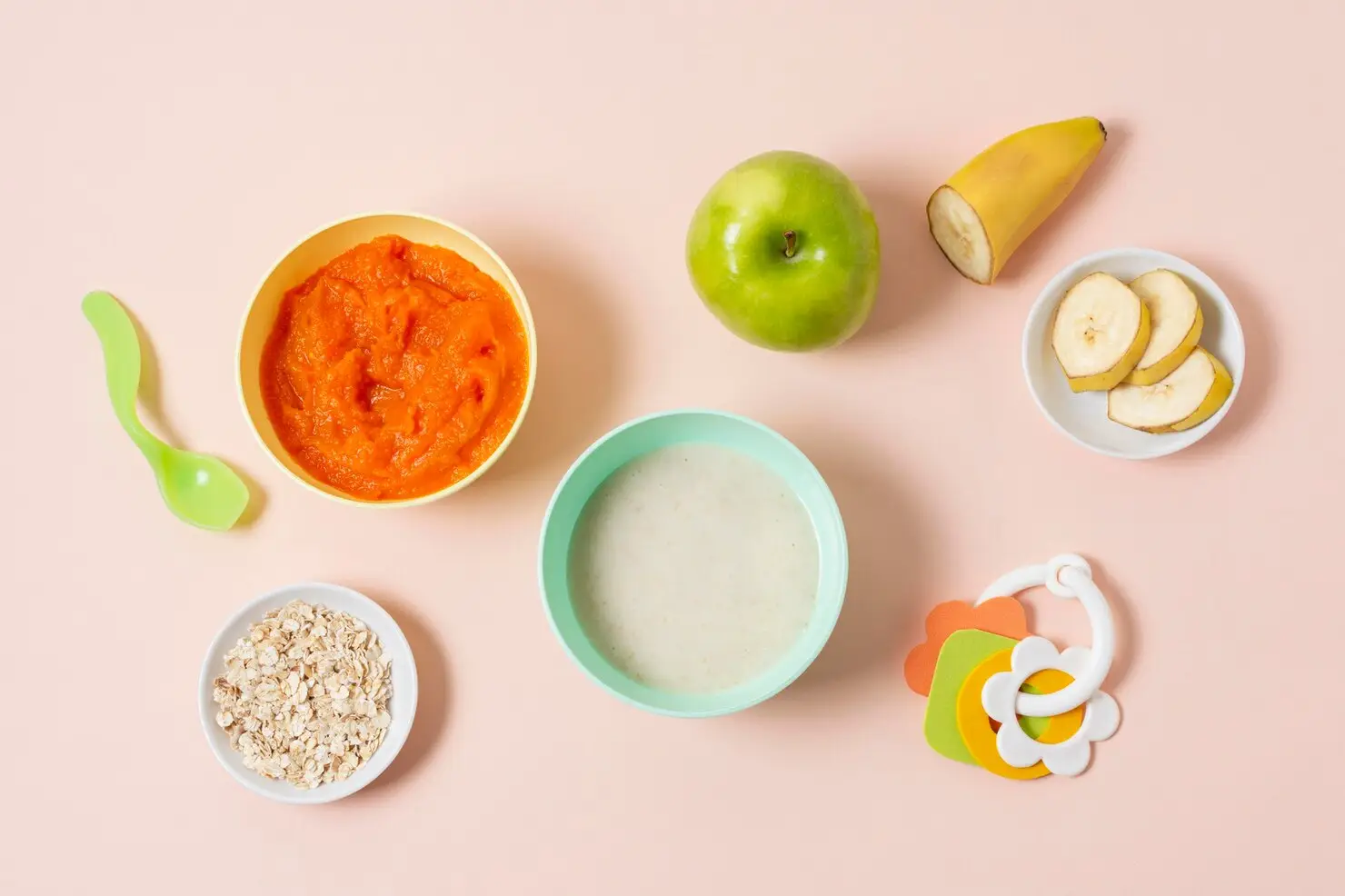
- Iron-fortified infant cereals.
- Pureed lentils.
- Mashed beans.
- Pureed chicken or turkey.
- Soft-cooked and mashed beef.
- Pureed tofu.
Fruits
Naturally sweet fruits introduce vitamins and fiber.
Examples:
- Mashed banana.
- Pureed pear.
- Applesauce without added sugar.
- Mashed avocado.
- Pureed peaches.
- Mango puree.
Vegetables
Offering vegetables early exposes babies to a range of flavors.
Try:
- Sweet potato puree.
- Steamed and mashed carrots.
- Pureed peas.
- Butternut squash.
- Pumpkin.
- Zucchini.
- Broccoli blended until smooth.
Whole Grains
Whole grains provide energy and nutrients.
Suitable options include:
- Oatmeal made for infants.
- Soft cooked oatmeal.
- Quinoa blended to an appropriate texture.
- Whole-grain infant cereals.
Protein-Rich Foods
Protein supports healthy growth and muscle development.
Age-appropriate examples include:
- Scrambled eggs cooked thoroughly.
- Plain Greek yogurt (without added sugar).
- Soft beans.
- Lentils.
- Shredded chicken.
- Flaked fish that is fully cooked and free of bones.
- Mashed tofu.
Homemade vs. Store-Bought Baby Food
Both homemade and commercially prepared baby foods can be healthy choices.
Homemade Baby Food
Advantages include:
- Control over ingredients.
- No unnecessary added sugars or salt.
- Fresh flavors and textures.
- Flexibility in combining foods.
Store-Bought Baby Food
Benefits include:
- Convenience for busy families.
- Consistent preparation.
- Easy portability.
- Wide availability of single-ingredient options.
When choosing packaged foods, look for products with simple ingredient lists and no unnecessary added sweeteners.
Easy Homemade Baby Food Recipes
Sweet Potato Puree
Ingredients:
- 1 sweet potato.
Instructions:
- Peel and dice the sweet potato.
- Steam until soft.
- Blend with water or breast milk/formula to reach the desired consistency.
- Allow to cool before serving.
Avocado Mash
Ingredients:
- 1 ripe avocado.
Instructions:
Mash thoroughly with a fork until smooth. Thin with breast milk or formula if needed.
Apple Pear Blend
Ingredients:
- 1 apple.
- 1 pear.
Instructions:
Peel, steam until soft, blend until smooth, and cool before serving.
Lentil Vegetable Puree
Ingredients:
- Cooked lentils.
- Carrots.
- Spinach.
Blend until smooth with enough liquid to achieve a suitable texture.
Introducing New Foods
Parents often introduce one new food at a time and observe for any concerning reactions before adding several more. This approach can make it easier to identify foods that may not agree with a child.
Continue offering previously accepted foods while gradually expanding variety and textures as development progresses.
Common Food Allergens
Current guidance generally supports introducing common allergenic foods, such as peanut products (in age-appropriate forms), eggs, dairy, wheat, soy, sesame, fish, and shellfish, during infancy when developmentally appropriate, rather than delaying them without a medical reason. However:
- Discuss introduction with your pediatric healthcare provider if your baby has severe eczema, known food allergies, or a strong family history of allergies.
- Never offer whole nuts because they pose a choking hazard.
- Nut butters should be thinned or spread very thinly and served in developmentally appropriate ways.
Seek immediate medical care if a baby develops signs of an allergic reaction such as swelling, difficulty breathing, widespread hives, or persistent vomiting.
Foods to Avoid During Infancy
For safety reasons, avoid giving babies:
- Honey before 12 months of age due to the risk of infant botulism.
- Whole grapes unless cut into appropriate small pieces for older infants.
- Whole nuts or large spoonfuls of nut butter.
- Popcorn.
- Hard candies.
- Large chunks of raw vegetables or firm fruit.
- Foods with excessive added salt or sugar.
- Unpasteurized dairy products or juices.
Always supervise babies during meals and ensure they are seated upright while eating.
Baby-Led Feeding and Self-Feeding
Many families choose to combine spoon-feeding with opportunities for babies to self-feed soft foods when developmentally ready.
Examples of suitable finger foods include:
- Soft banana strips.
- Steamed sweet potato wedges.
- Ripe avocado slices.
- Soft scrambled eggs.
- Well-cooked pasta.
- Soft cooked vegetables.
- Toast strips with a thin spread of mashed avocado.
Self-feeding can help develop coordination and encourage independence while exposing babies to different textures.
Sample Daily Feeding Plan (Around 6–12 Months)
Breakfast
- Iron-fortified oatmeal.
- Mashed banana.
Morning Milk Feed
- Breast milk or infant formula.
Lunch
- Pureed chicken and sweet potato.
- Steamed mashed peas.
Afternoon Milk Feed
- Breast milk or infant formula.
Dinner
- Lentil puree with carrots.
- Mashed avocado.
Evening Milk Feed
- Breast milk or infant formula.
Individual feeding schedules and amounts vary from baby to baby.
Tips for Encouraging Healthy Eating Habits
- Eat together as a family when possible.
- Offer a variety of colors and flavors.
- Avoid pressuring babies to finish meals.
- Allow babies to respond to their own hunger and fullness cues.
- Introduce textures gradually.
- Repeat exposure to foods that are initially refused.
- Keep mealtimes calm and positive.
Patience is important—babies may need multiple opportunities before accepting a new food.
Frequently Asked Questions
Can babies drink water?
Small amounts of water may be introduced around the time solids are started, but breast milk or infant formula remains the primary source of nutrition throughout the first year. Follow your pediatrician’s guidance regarding appropriate quantities.
Is homemade baby food healthier?
Not necessarily. Both homemade and commercially prepared baby foods can support healthy nutrition when made with wholesome ingredients and prepared safely.
Should babies avoid spices?
Mild herbs and spices can often be introduced gradually as part of family meals, provided foods are not excessively salty or spicy.
What if my baby refuses vegetables?
Continue offering vegetables in a relaxed manner without forcing them. Repeated exposure often increases acceptance over time.
Food Safety Tips
To protect your baby’s health:
- Wash hands and preparation surfaces thoroughly.
- Cook meats, eggs, and seafood completely.
- Refrigerate leftovers promptly.
- Discard food left at room temperature for extended periods.
- Use clean utensils and avoid feeding directly from storage containers if leftovers will be saved.
- Check food temperatures before serving.
Final Thoughts
Introducing baby foods is about more than meeting nutritional needs—it is an opportunity to establish lifelong healthy eating habits and enjoyable family mealtimes. By offering a wide variety of nutrient-rich foods, respecting developmental readiness, and creating a positive feeding environment, parents can support healthy growth and encourage curiosity about food.
For families in New Jersey and Staten Island, focusing on balanced nutrition, safe food preparation, and responsive feeding practices can help babies build a strong foundation for lifelong health. With patience, consistency, and guidance from a pediatric healthcare provider when needed, introducing solid foods can be a rewarding milestone for both parents and children.