
Baby Food
Knowing when to start baby food is both crucial and tricky. Starting baby on solids too early means you might increase the risk of choking, obesity and bellyaches, but introducing solids too late means you might slow baby’s growth and encourage an aversion to solid foods, among other conditions. Fortunately, doctors have zeroed in on a sweet spot for starting baby food, which is sometime between 4 and 6 months of age—though, ideally, baby should be receiving their nutrition exclusively from breast milk until the six-month mark, according to the American Academy of Pediatrics (AAP). How to tell if it’s time for starting solids for your little one? Baby will give you clues, including:
• Baby can sit in a high chair comfortably on their own. This is a major sign in terms of when to start baby food,
• Baby looks interested at mealtime. Babies likes to mimic what we do, so if your child likes to sit up like a big kid and watch you eat, then by all means let them try eating too.
• Baby can move food to the back of their throat to swallow. But if baby tends to push the food out of their mouth—not because they don’t like it, but because they can’t seem to get the food to where it needs to go—hold off on starting solids.
How to Start Baby on Solids
At 4 to 6 months, most of baby’s nutrition will still come from breast milk or formula, so don’t worry if baby doesn’t like eating food right away. Introducing solids is a gradual process, and every baby learns in their own time. Here are some general guidelines for how to start baby on solids:
• Feed baby with a spoon. Letting your child go at it with their hands may seem tempting (and super-cute), but it’s best that they learn the right way from the get-go. (And even then, be prepared to clean up more than a few messes!) Also, never put cereal (or any other food) in baby’s bottle—it’s a choking hazard.• Start slowly. When introducing solids, a half spoonful will do at first—you may even want to talk baby through it (“Yummy!”). To make it easier for baby to get accustomed to the idea of swallowing solids, start mealtime with a little breast milk or formula, then offer some food (again, no more than a half teaspoon at a time) and finish off with more breast milk or formula. If baby cries or turns away when you present the spoon, try again some other time. Start off with introducing solids at one meal a day, then slowly work your way up. The morning is a good place to start, since baby is often hungriest at that time. When starting solids, baby typically won’t eat more than an ounce or two in one sitting.
Try new foods more than once. Since babies’ tastes will evolve, you may need to try a food 20 times before a baby actually likes it, says Kupersmith.
• Stick with the same food for three days before trying another one. This makes it easy to track whether baby is allergic to a particular food.
• Try foods in different forms. If baby doesn’t like pureed food, try it mashed. After all, baby is learning about new textures as well as new tastes. It may be a case of trial and error until you find a winner.
Best First Foods for Baby
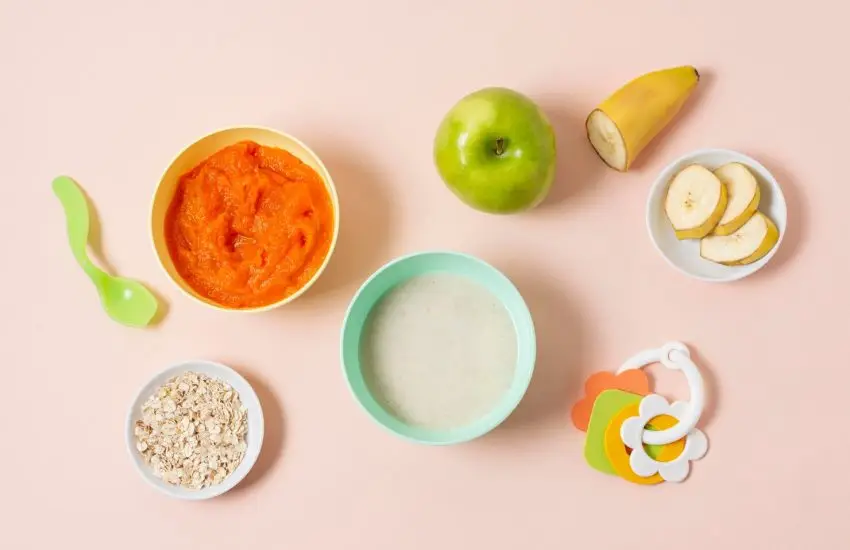
- Baby cereal, such as oatmeal, rice, barley
- Sweet potato
- Banana
- Avocado
- Apples
- Pears
- Green beans
- Butternut squash
If your child has been breastfeeding, check with your pediatrician about getting a jump on pureed chicken or beef when you’re starting solids. These foods contain easily absorbable forms of iron and zinc, which baby needs by 4 to 6 months.
At around 9 months, baby should have already worked their way up to a variety of foods, including cereal, vegetables, fruits, meats, eggs and fish (see below regarding the last two). (Keep in mind, though, that baby will still get the majority of their nutrients from breast milk or formula until age one.) By now, baby will probably settle on three meals a day along with two snacks. Let them consume about 4 ounces of solids at each meal (equivalent to a small jar of strained baby food) and about half that amount for each snack.
Save honey and cows milk for after baby’s first birthday—there’s a risk for infant botulism with honey (a type of bacterial poisoning), and baby’s tummy isn’t prepared to digest large amounts of cow’s milk until they’re about one year old. Avoid adult processed foods and foods that are choking hazards (such as sticky foods, like large gobs of peanut butter; hard foods that are difficult to gum, like raw vegetables, nuts, seeds and popcorn; and round, slippery foods that haven’t been cut up, like grapes and cherry tomatoes). Instead, the first foods for baby, and those in the months that follow, should be soft and served mashed, pureed or (once baby seems ready to move up from the really mushy stuff) cut up into really little bits.