
Safety
As you hold your new bundle of joy in the hospital, you promise to always love and keep your baby safe. You know he/she depends on you for everything, and you want to give your baby your best. Besides following general home safety tips especially for baby:
Bathing
- Bathe baby in a specially designed, slip-resistant infant bathtub.
- Fill tub with 2-3 inches of warm—not hot—water (check temperature with your wrist or tub thermometer. The water should be between 96-100 degrees Fahrenheit).
- Stay within arm’s reach of your baby while he or she is in the tub.
Nursery
- Bassinet and/or crib should meet current safety standards.
- Keep items such as pillows, comforters, quilts, and stuffed toys out of the bed.
- Mattress should be firm and fit snugly within the bassinet/crib.
- Remove mobiles when baby can sit on his or her own.
- Remove bumper pads and shift crib mattress to lowest position when baby can pull to a standing position.
- Keep bassinet/crib positioned away from windows, heaters, lamps, and other furniture.
- Do not leave baby unattended on a changing table, and be sure to use the safety strap.
- Avoid walking away from baby by keeping all changing supplies within arm’s reach of changing table.
- Always put your baby to sleep on his or her back.
Feeding
During the first year of life, eating is constantly an adventure. Baby can rapidly move from breast milk/formula to trying his/her first table foods. Plus, babies use their mouths to learn about their world, so many non-food items also find their way into little mouths. Due to all of the action these mouths see, choking is an inherent danger. Following are a few tips for keeping your baby safe:
- Until age 4, avoid foods that can block the airways such as: peanut butter, hot dogs, popcorn, whole grapes, raw carrots, raisins, nuts, hard candies or toffees and chewing gum.
- Provide safe finger foods such as bananas, well-cooked pasta and vegetables, o-shaped low-sugar cereals (such as Cheerios).
- Keep items such as coins, buttons, balloons, safety pins, barrettes, and rocks out of your child’s reach.
- Follow age recommendations on toys, especially those with small parts, and make sure toys are in good repair.
- Be vigilant. Small children put many things in their mouths. A watchful adult is often the best defense.
Other
- Purchase and correctly install an infant car safety seat.
- Avoid burns by not holding your baby while cooking or holding hot food or beverages.
- Never leave baby unattended on beds, sofas, chairs, or any place where he or she may fall.
- Install baby gates at the top and bottom of stairways.
- Never leave baby alone with other young children or with pets.
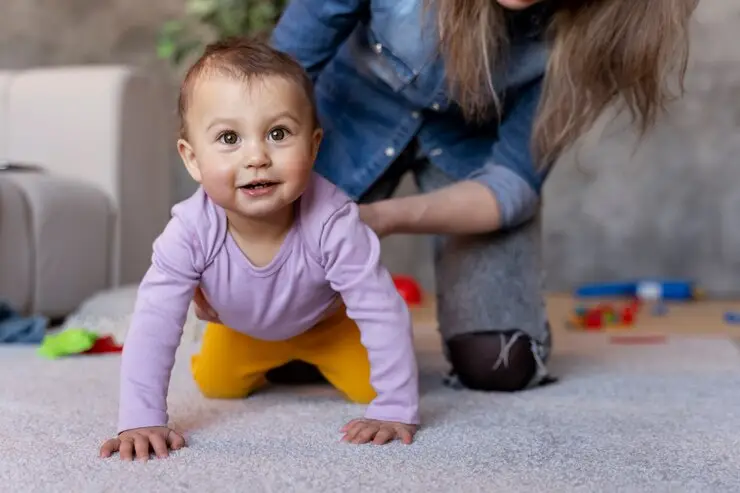
- Before baby begins crawling childproof your home.