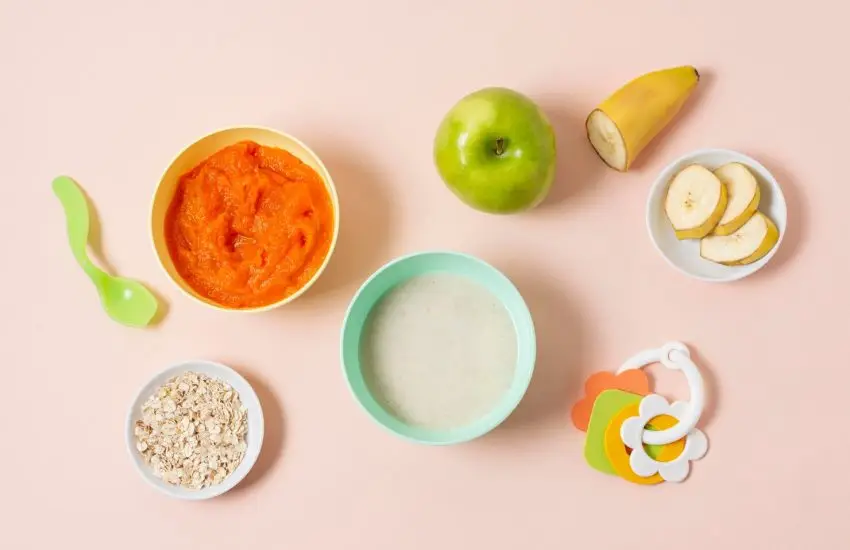

Baby Food
Here are some key points to consider when determining if it’s time to start solids for your baby:
- Age: The recommended age to introduce solids is between 4 and 6 months, according to the American Academy of Pediatrics (AAP). Before this age, babies’ digestive systems are not fully developed, and their nutritional needs are typically met by breast milk or formula.
- Signs of readiness: Look for signs that your baby is ready for solids. These include sitting up with support, showing interest in food, being able to hold their head steady, and having good tongue control to move food from the front to the back of their mouth.
- Loss of the tongue-thrust reflex: The tongue-thrust reflex, which causes babies to push food out of their mouths with their tongues, typically diminishes around 4 to 6 months. This is an important indicator that your baby may be ready to try solid foods.
- Increased appetite and hunger: If your baby seems hungry even after regular breast milk or formula feedings, it may be a sign that they are ready for additional nutrition from solids. This increased appetite can indicate that their energy needs are no longer being fully met by milk alone.
- Physical development: Your baby should have good head and neck control to sit upright and swallow food safely. They should also have the ability to move food from the front of their mouth to the back and coordinate chewing motions.
- Consultation with the pediatrician: It’s always a good idea to discuss the introduction of solids with your pediatrician. They can evaluate your baby’s individual development, growth, and nutritional needs and provide personalized guidance.
Remember, every baby is different, and it’s important to follow your baby’s cues and consult with your healthcare provider before starting solids. Taking these factors into consideration will help you make an informed decision about when to introduce solid foods to your little one.