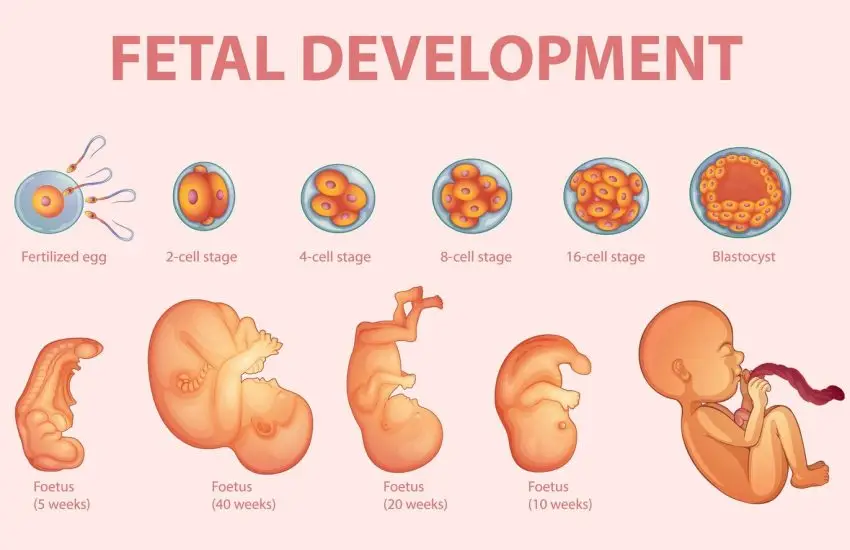

Fetal Development
Fetal development refers to the process by which an embryo gradually transforms into a fetus and continues to grow and mature within the mother’s womb. Here is a general overview of the stages of fetal development:
- First Trimester (Weeks 1-12): During the first trimester, the fertilized egg implants in the uterus and rapidly develops. Key milestones include:
- Week 4: The embryo develops a neural tube, which will eventually become the brain and spinal cord.
- Week 8: The embryo becomes a fetus, and major organs, limbs, and facial features begin to form.
- Week 12: The fetus has developed all major organs, muscles, and bones. It starts to look more like a tiny human and is about 2-3 inches long.
- Second Trimester (Weeks 13-27): The second trimester is a period of rapid growth and refinement. Highlights include:
- Week 16: The fetus’s sex may be distinguishable through ultrasound.
- Week 20: The halfway point of pregnancy. The fetus develops a growth spurt and starts to exhibit more pronounced movements.
- Week 24: The fetus reaches a stage of viability, where it has a chance of survival with medical assistance. Its lungs continue to mature.
- Third Trimester (Weeks 28-40+): In the final trimester, the fetus focuses on further growth and preparation for birth. Notable developments include:
- Week 32: The fetus gains more weight and its movements may feel more restricted due to limited space.
- Week 36: The fetus is considered full-term, and its organs are prepared for life outside the womb.
- Week 40+: The due date arrives, but it’s common for babies to be born in the two weeks before or after the estimated date.
Throughout fetal development, the baby’s systems, such as the circulatory, respiratory, digestive, and nervous systems, continue to mature. The fetus gains weight and accumulates fat, which helps regulate body temperature. The baby also develops reflexes and can respond to external stimuli, such as sound and light.
It’s important to note that these milestones are approximate, and individual fetal development can vary. Regular prenatal care, including ultrasounds and check-ups, allows healthcare providers to monitor the growth and development of the fetus and ensure its well-being.